Guild Raid Boss Meta Guide
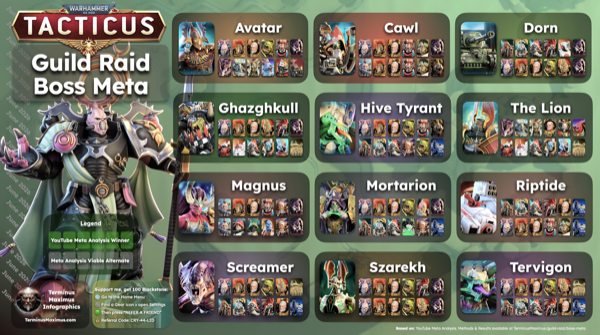
Meta and alternate Guild Raid boss teams, built from researched replay data and creator examples.
Featured Infographic
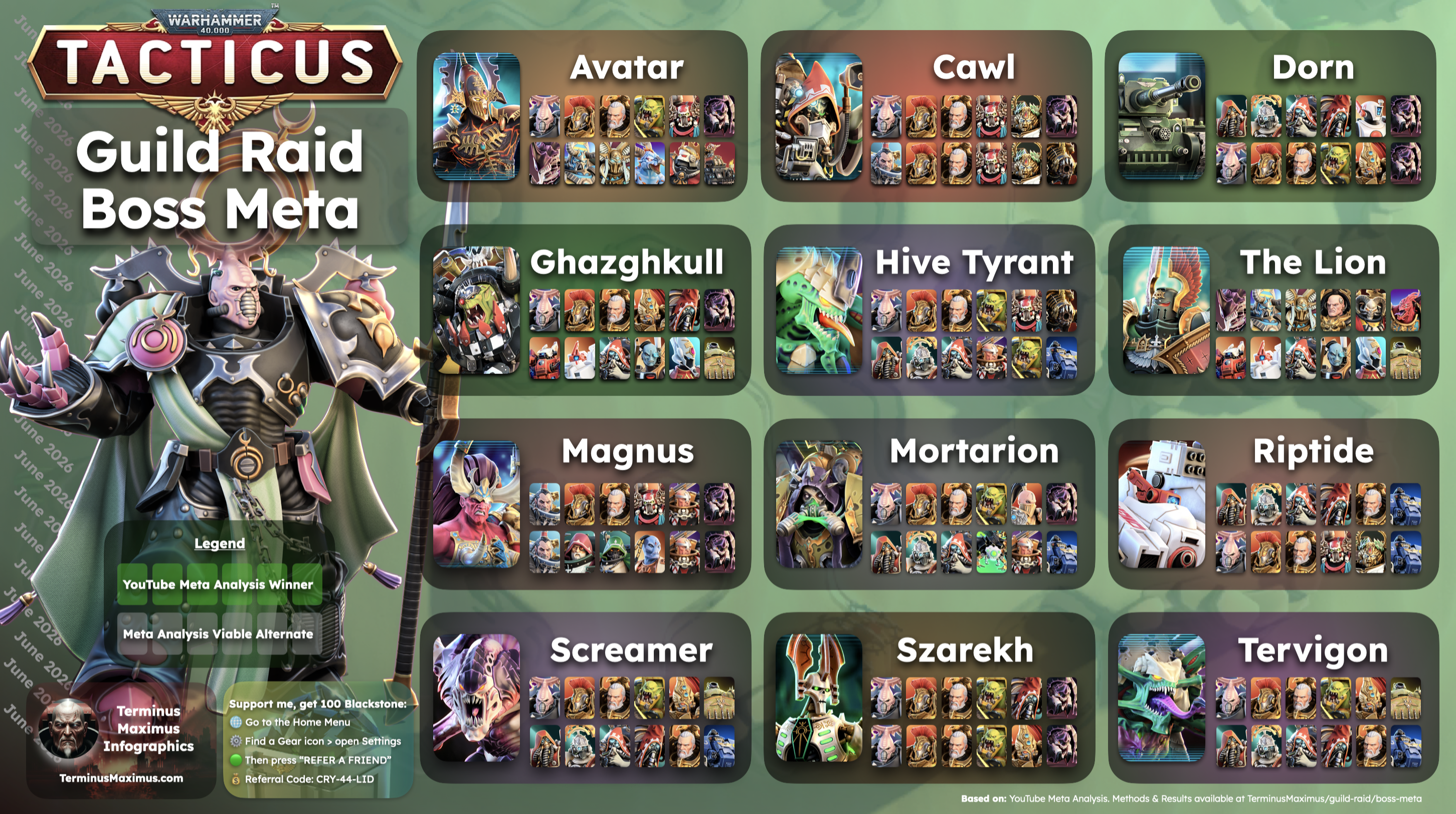
Boss Meta Guide Basics
Guild Raid teams are expensive to build, and investing in the wrong characters can set your account back for months. The goal of this guide is simple: identify the strongest teams for each boss based on what is actually working in the current game.
Unlike a traditional tier list, these recommendations are not based on opinion or isolated showcase videos. Every team shown here was validated through community replay research and weighted using performance, difficulty, recency, and frequency.
- ⭐ Meta Team — The strongest overall team recommendation for that boss.
- 🔄 Alternate Team — A strong second option, usually built around a different team archetype.
Performance still depends on more than simply owning the right characters. Rank, badges, equipment, Machine of War choice, positioning, boss mechanics, and execution all matter.
Use the replay library below to see the teams in action before deciding where to invest.
Replay Library
Replay examples used to validate each boss recommendation. Only Meta and Alternate team selections are shown.
Cawl
Dorn
Ghaz
Hive Tyrant
Lion
| Choice | Team | Tier | Damage | Creator |
|---|---|---|---|---|
| ⭐ Meta Team | Neuro, Abrax, Ahri, Abaddon, Archi, Zkar | L4 | 0 | Nandi |
| 🔄 Alternate Team | Farsight, Revas, Actus, Darkstrider, Eldy, PBC | L4 | 1,252,841 | TacticalRaven |
Magnus
Mortarion
Riptide
Screamer
Szarekh
Tervigon
Methodology & Results
How This Meta Analysis Was Built
Rather than relying on opinion or a traditional tier list, these recommendations are based on a large-scale analysis of high-performing Guild Raid replays published by the Tacticus community.
Over 100 YouTube raid replays from multiple established creators were collected and cataloged. For each replay, the following information was recorded:
- Boss
- Difficulty Tier (L1-M2)
- Damage dealt
- Team composition
- Upload date
Step 1: Measuring Replay Quality
Each replay was assigned a Replay Scaled Damage value. Raw damage was adjusted for raid difficulty, giving additional credit to successful clears at L5, M1, and M2.
Step 2: Accounting for the Current Meta
More recent replays were given greater influence through a gradual recency weighting, while older strategies still contributed to the analysis.
Step 3: Measuring Community Adoption
Teams that appeared repeatedly across multiple independent creators were rewarded through a Frequency Weight.
Step 4: Calculating the Meta Score
These factors were combined into a single Meta Score:
Meta Score = Replay Scaled Damage × Date Weight × Frequency Weight
This rewards teams that are:
- High performing
- Successful at difficult content
- Widely adopted by the community
- Representative of the current state of the game
Final Recommendations
The highest-scoring composition is selected as the META recommendation.
An ALTERNATE recommendation is then chosen through manual review, favoring a fundamentally different team archetype rather than a small variation of the META team.
Related Guides
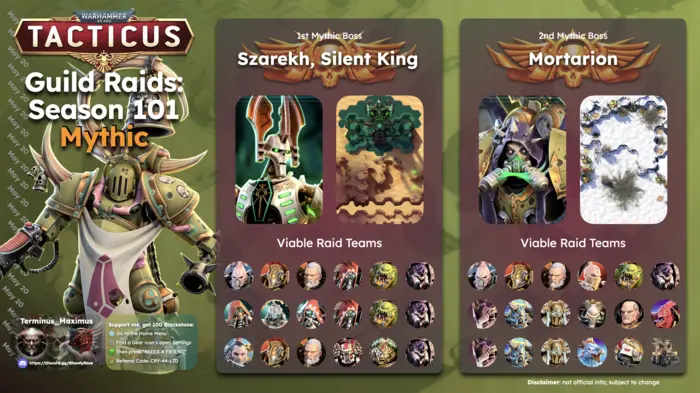
Guild Raid Archive
Browse previous Guild Raid seasons, boss lineups, maps, and infographic archives.
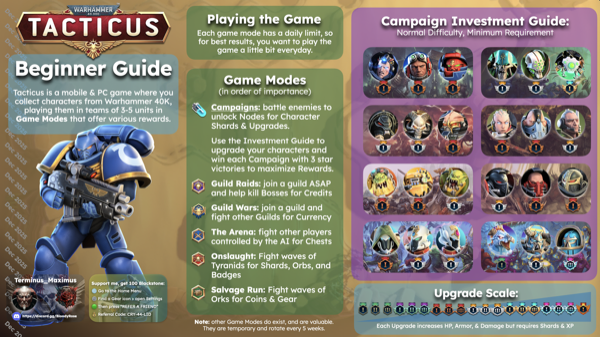
Beginner Guide
New player priorities and Normal Campaign progression.
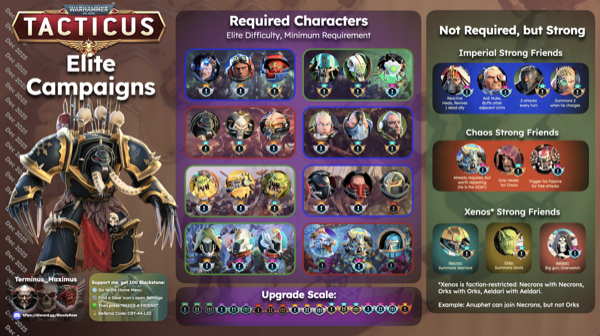
Elite Campaigns
Elite Campaign minimum investment guide.
Boss Meta Guide
Meta and alternate teams for every Guild Raid boss, backed by replay research.
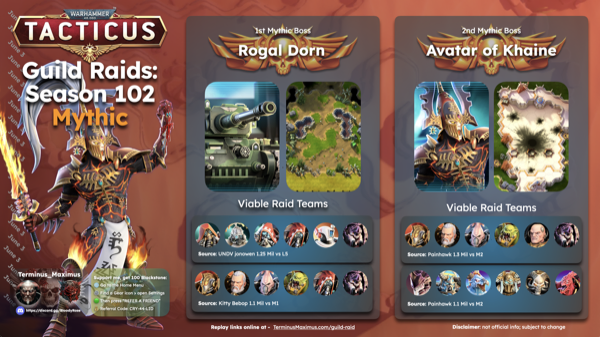
Current Season
Current Guild Raid season infographics, boss lineups, and team guidance.
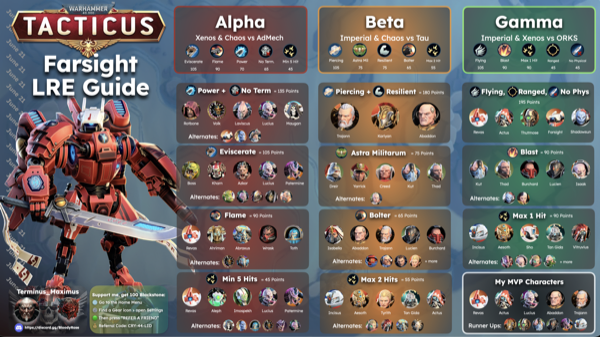
Farsight LRE - Current LRE
Farsight Legendary Release Event teams, requirements, and planning.
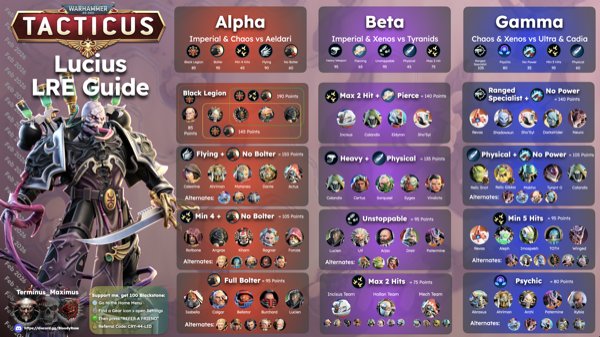
Lucius LRE
Lucius Legendary Release Event teams, requirements, and planning.
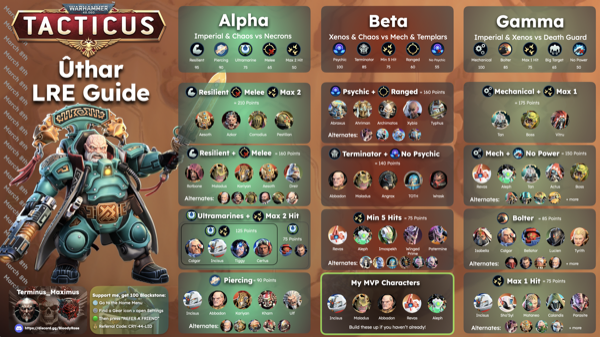
Uthar LRE
Uthar Legendary Release Event teams, requirements, and planning.
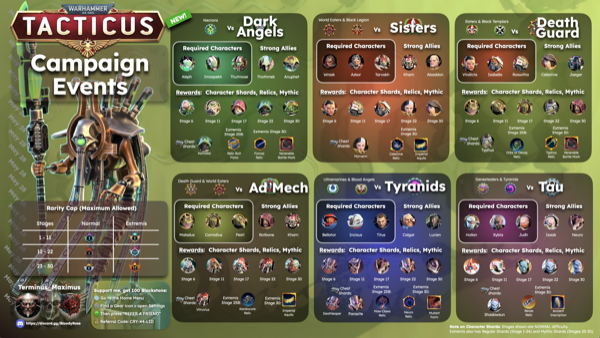
Campaign Event
Event details, required characters, and rewards.
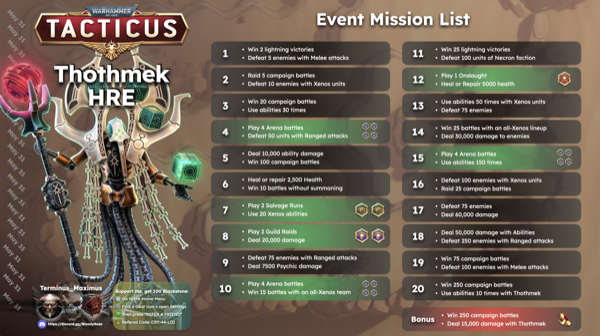
Hero Release Events
Mission guides designed to maximize unlock chances.
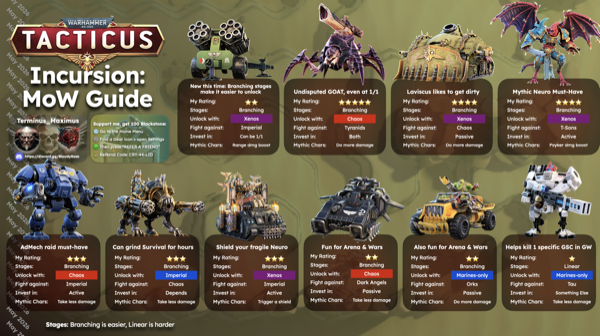
Incursion / MoW
Machine of War recommendations and Incursion basics.
About Me
More about Terminus Maximus.